

You can start growing fresh vegetables indoors with these eight small indoor vegetable garden ideas: windowsill herb gardens, vertical growing systems, microgreens and sprouts, hydroponic units, container gardens with dwarf varieties, LED grow light setups, countertop smart gardens, and wall-mounted planters.
These options work well in small spaces like apartments and require minimal experience. While you build your indoor gardening skills, focus on low-maintenance crops like lettuce, herbs, and cherry tomatoes. Let’s investigate each method to help you create your perfect indoor garden.
My Quick Highlights
- Set up a simple windowsill herb garden with compact containers and south-facing placement for optimal natural light exposure.
- Install vertical wall-mounted planters to maximize growing space while keeping vegetables easily accessible for maintenance.
- Start with microgreens in shallow trays for quick harvests and minimal space requirements on kitchen countertops.
- Use self-watering containers with dwarf vegetable varieties to create an efficient small-space garden system.
- Create a tiered plant stand system near windows to grow multiple vegetables while maintaining proper spacing and light exposure.
Why Start an Indoor Vegetable Garden?
Whether you’re dealing with limited outdoor space or want to enjoy fresh produce year-round, starting an indoor vegetable garden offers countless benefits for both novice and experienced gardeners.
A small indoor vegetable garden provides food security and sustainable gardening options while improving your home’s air quality. You’ll save money on groceries and have access to fresh herbs and vegetables steps from your kitchen.
In my experience, container gardening and space-saving planters make the most of windowsill gardens.
When I converted my kitchen counter into a compact growing space, I realized that even basic indoor gardening supplies could yield impressive results.
You’ll feel satisfaction watching seedlings transform into healthy, edible plants.
Even with the smallest backyard, you can implement creative container solutions to maximize your growing potential.
Windowsill Herb and Vegetable Gardens
Three essential factors make windowsills ideal for growing compact herb and vegetable gardens: abundant natural light, convenient access, and space efficiency.
Your window box gardens can thrive with proper plant spacing and low-maintenance vegetables like lettuce and herb varieties.
When I tested different positions, south-facing windowsills provided the best natural light gardening conditions. For darker locations, you’ll need grow lights to support vegetable seedlings.
In my experience, small-space gardening techniques work best when you choose compact plants.
You can try growing basil, chives, and leaf lettuce. I’ve successfully cultivated them in 6-inch pots along my kitchen windowsill.
Consider using surprising container solutions like repurposed household items to maximize your limited growing space while adding visual interest.
Vertical Gardening Systems for Small Spaces

Smart vertical gardening systems can transform any bare indoor wall into a thriving vegetable garden, maximizing your growing space through strategic upward design. Wall-mounted gardens and hanging vegetable gardens are particularly effective for apartments and small homes. Raised bed designs can further maximize your limited indoor growing space while providing excellent drainage and soil control.
| System Type | Best For |
|---|---|
| Plant Stands | Leafy Greens |
| Garden Shelving | Herbs |
| Grow Bags | Tomatoes |
| Hydroponic | Lettuce |
| Wall Pockets | Small Peppers |
In my experience, container drainage is essential for vertical setups. I’ve found that modular hydroponic systems for beginners offer the cleanest solution, while traditional garden design ideas using tiered plant stands work best when you’re starting. Your indoor garden design should prioritize light exposure and accessibility for maintenance.
Microgreens and Sprouts: Quick Harvests in Tiny Spaces
Moving beyond vertical systems, growing microgreens and sprouts is one of the fastest ways to produce fresh, nutrient-dense vegetables indoors.
You can transform your tabletop gardens into productive growing spaces using seed starting techniques and indoor garden kits.
Transform any spare tabletop into a thriving indoor garden using simple seed starters and growing kits for year-round harvests.
- Begin with quick-growing sprouts like alfalfa or mung beans in simple germination trays, harvesting within 5-7 days.
- Cultivate microgreens in a shallow growing medium, using garden planner apps to track plant growth stages.
- Experiment with kitchen scraps regrowth – I’ve successfully regrown lettuce bases and celery hearts on my windowsill, yielding fresh greens every 2-3 weeks.
Hydroponic Systems for Soil-Free Indoor Growing
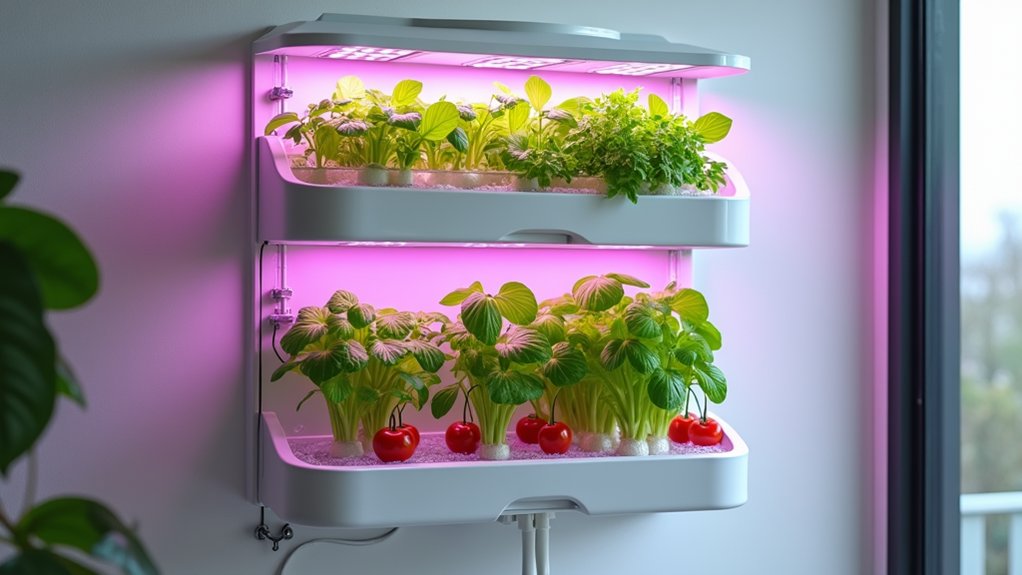
Hydroponic growing systems offer an elegant solution for year-round indoor vegetable production without the mess and maintenance of traditional soil gardens.
Mini hydroponic systems are perfect for countertops, while vertical hydroponics maximize space efficiency in small apartments.
In my experience testing various smart garden systems, LED grow lights combined with controlled environment agriculture produce consistently healthy crops.
You’ll need to maintain proper plant nutrients in your water propagation system, but it’s simpler than you’d think.
I’ve found bioponics particularly effective, using beneficial bacteria to improve nutrient absorption.
These setups typically use 90% less water than traditional gardens, making them incredibly efficient for water conservation.
Container Gardening with Dwarf Vegetable Varieties
Although indoor space may be limited, container gardening with compact vegetable varieties offers an ideal solution for growing fresh produce throughout the year.
Dwarf vegetable varieties thrive in self-watering containers filled with quality indoor potting soil. In my experience, shallow-rooted vegetables like radishes and mini carrots consistently deliver excellent yields in limited spaces.
- Start with high-yield vegetables for small spaces, such as cherry tomatoes, mini cucumbers, and compact peppers.
- Choose container gardens at least 12 inches deep for root vegetables like baby beets and turnips.
- Select dwarf tomato varieties that won’t outgrow their pots, including ‘Tiny Tim’ or ‘Red Robin’.
Simple vegetable gardens can thrive when properly planned and maintained even with the smallest areas.
LED Grow Light Gardens for Low-Light Environments

LED grow lights revolutionize indoor vegetable gardening by providing the perfect spectrum of light needed for vigorous plant growth.
LED lighting technology has transformed indoor gardening, delivering precise light spectrums that power robust plant development and healthy growth cycles.
When I tested various indoor greenhouse setups, I found that LED systems reduce common gardening challenges like leggy seedlings and poor fruiting.
You’ll need to mount your lights 4-6 inches above your plants, adjusting height as they grow.
In my experience, combining LED grow lights with temperature control systems creates ideal conditions for low-light vegetables, even in dark apartments.
Ensure 12-16 hours of artificial light daily to prevent garden failure.
For optimal results, choose energy-efficient gardening tools for small spaces and carefully monitor your indoor vegetable garden design.
Countertop Smart Garden Systems for Beginners
Modern countertop smart gardens make growing fresh herbs and vegetables remarkably simple, even for beginners. These automated systems handle most of the complex aspects of indoor gardening, from light cycles to nutrient delivery.
- Get started by choosing a garden-to-table system that fits your kitchen garden layout. Most units need merely 2 square feet of countertop space and grow everything from leafy greens to cherry tomatoes.
- Download companion gardening apps to monitor plant light requirements and track growth progress through digital garden journaling.
- Add crucial indoor garden accessories like pH meters and spare grow pods to ensure continuous harvests.
YBF Final Thoughts
You might worry that indoor vegetable gardening requires too much expertise, but today’s innovative growing systems make it surprisingly approachable. Whether you’re starting with simple windowsill herbs or exploring hydroponic setups, you’ll find that growing your food indoors is both rewarding and practical. You can enjoy fresh homegrown produce year-round by choosing the method that fits your space and lifestyle from these eight options.








